

Opinion | Lessons Unlearned: From Vietnam to COVID-19
History rarely repeats itself exactly, but it often rhymes. Here in this Op-ed, I am comparing and contrasting some issues related to trust in our government, the players who became ‘‘rock stars’’ and how the legacy media interacted and reported on the current events.
For many Americans, the COVID-19 pandemic evoked memories not of previous epidemics, but of another national trauma—the Vietnam War. Both periods were marked by fear, uncertainty, rapidly changing events, and perhaps most importantly, an erosion of public trust. In each era, citizens increasingly questioned whether those entrusted with informing the nation were providing the complete truth.
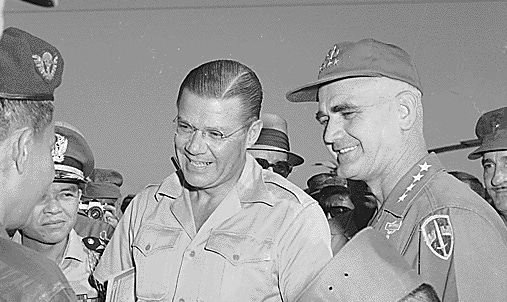
During the Vietnam War, Defense Secretary Robert McNamara and General William Westmoreland became the public faces of an optimistic military strategy. Presidents Lyndon B. Johnson and later Richard Nixon received reports from both (and other generals and advisors) suggesting that victory was attainable and that progress was measurable. Body counts, territory secured, and enemy losses became statistical proxies for success. We now in retrospect know the faults of this and how the public was deceived by government officials and the White House. At the time the FREE PRESS (legacy media) was embedded with troops on the front lines and they questioned the narrative. This caused much distrust at home (USA) with the population resulting on protests in the streets.
Yet those statistics reported by the hawks often failed to reflect realities on the ground. The 1968 Tet Offensive dramatically exposed the gap between official optimism and battlefield conditions. Although the offensive was ultimately costly for North Vietnam militarily, it shattered public confidence because it contradicted repeated assurances that the enemy was nearing defeat. Years later, McNamara himself publicly acknowledged that significant mistakes had been made in the prosecution of the war.
The COVID-19 pandemic (plandemic as some would qualify it) produced a different battlefield but raised similar questions about governmental transparency. I would have to estimate that 95% of the USA population is still naïve and misinformed about the truth regarding the origins of the virus, gain of function research, bioweapon development, real helpful measures to treat (IVM for example) and the horrors of the mRNA vaccine with lasting long-term untoward effects.
Dr. Anthony Fauci became one of the most recognizable scientific advisors in American history. He has a long-storied history of one of the longest serving public servants and highest paid for that matter in the history of the USA. Going back to HIV and AIDS, Ebola virus outbreaks in West Africa, and the recent Pandemic, he has symbolized the ‘‘face’’ of these healthcare crises. Now in retrospect and after much research and investigation it is recognized that he faltered many time in each case through the years until his recent retirement. The lasting impacts he has made on our civilization are immense.
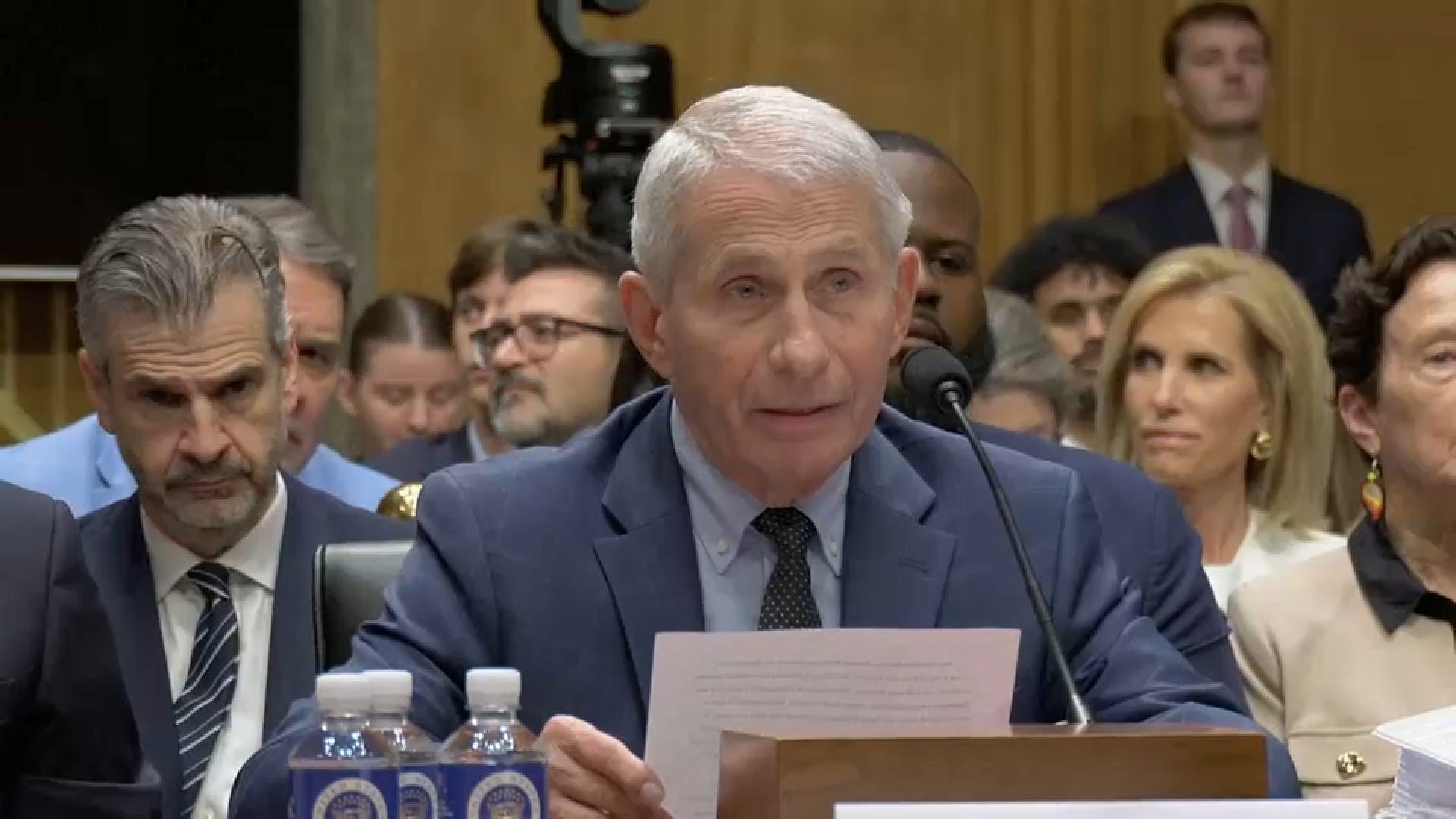
Throughout the pandemic, his guidance evolved and shapeshifted as new evidence emerged—a reality inherent to scientific inquiry. But there was also something more powerful at play here. It was a type of hubris and arrogance and apparently a focus on professional and personal fame and wealth. Remember him boasting that “I am science”, only a megalomaniac would utter such words. However, critics argued that some public statements, particularly regarding masking, laboratory-origin hypotheses (now proven true), school closures, and vaccine-related expectations, either changed substantially over time or were communicated without sufficient acknowledgment of uncertainty, truth and ‘‘real science”. Supporters countered that recommendations appropriately evolved with accumulating evidence and changing circumstances. However, when you consider a blanket presidential pardon (of a person who was never charged with a crime at the time) and his horrific testimony on Capitol Hill this month it makes one wonder what is going on in the mind of this man. Makes you wonder what is going on in the minds and psyche of his supporters. Are they entirely indoctrinated, foolish or under some spell?
Recent congressional hearings added another layer to the public debate when Fauci invoked his Fifth Amendment rights in response to certain questions. Yes, this whole process has been politicized and divided among political party lines. But for heaven’s sake, if you have nothing to hide, why invoke the 5th? Legally, exercising the Fifth Amendment is a constitutional protection and does not establish guilt or innocence, but it does not paint a favorable picture at all. Nevertheless, in the court of public opinion, many viewed the decision as symbolic of declining institutional accountability and honesty.
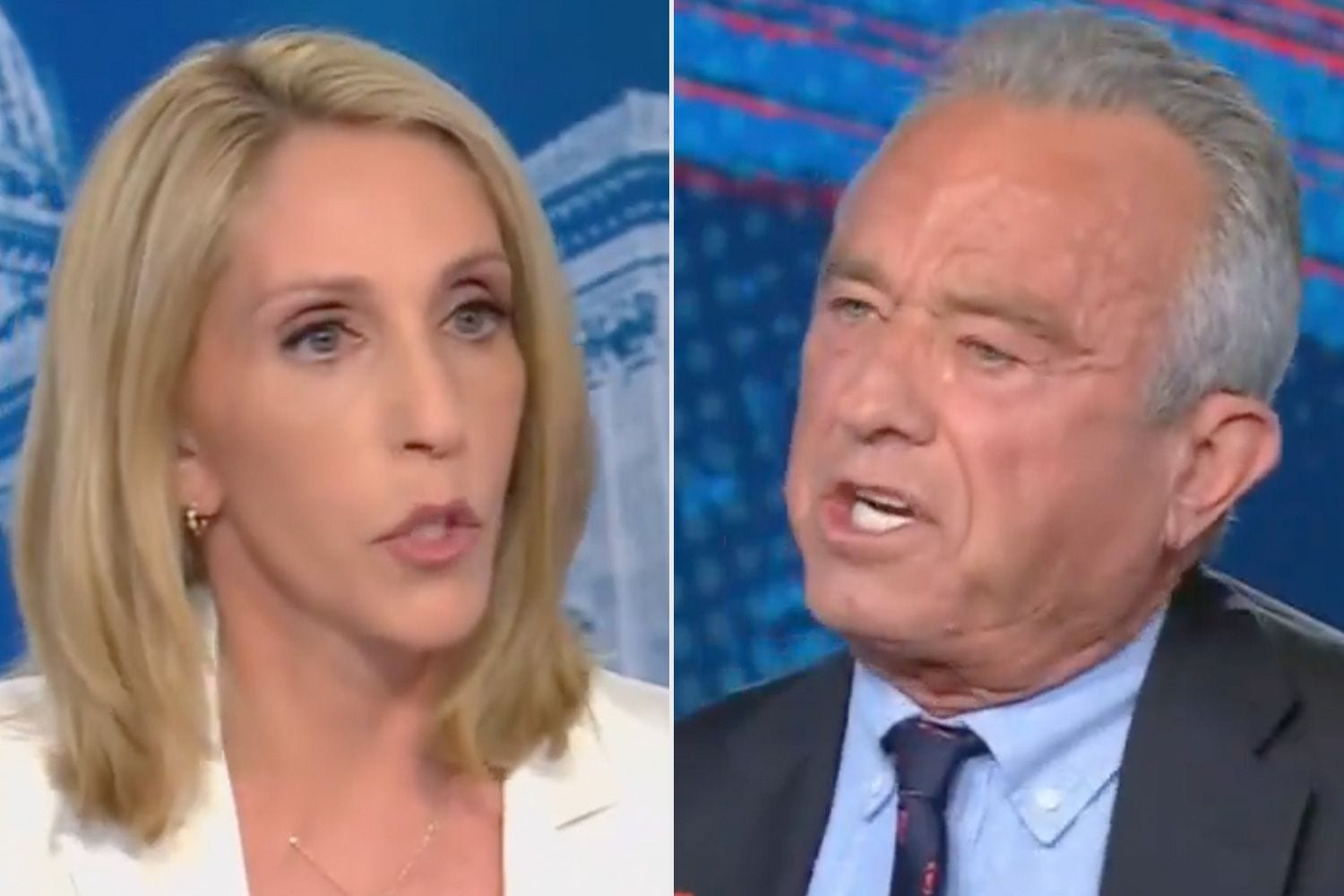
Let us take a look at another figure in healthcare, Robert F. Kennedy, Jr. has frequently appeared in lengthy, adversarial interviews defending his positions on vaccines (vaccine critic not anti-vaxxer), public health policy, and government transparency. His interview with CNN last week that went viral on social media became emblematic of today’s polarized media environment. Supporters viewed Kennedy as willing to answer difficult questions despite persistent interruption and skepticism. He actually answered the question posed by the CNN Journalist rather nicely, but his answer was ignored and he was badgered by that journalist as if she was on a mission by some hidden agenda. Was she supporting Fauci, Big Pharma or something else? Critics argued that journalists were appropriately challenging claims they believed required scrutiny. Well maybe in the 1970s that was the case, but I cannot say that is the case today. Legacy media has faltered so badly in recent decades that we can no longer consider them ‘‘Free Press”, they are bought and paid for by special interest groups.
Regardless of one’s conclusions, viewers witnessed two fundamentally different approaches to public accountability: one involving extensive questioning in a televised interview, the other involving legal silence during congressional testimony.
The comparison extends beyond personalities.
Perhaps the more profound contrast lies in the role of the American press.
During the Vietnam conflict, major newspapers and television networks increasingly challenged official narratives. Investigative journalism exposed discrepancies between public statements and internal government assessments. Coverage from reporters in the field often contradicted optimistic briefings in Washington and by the Pentagon. The publication of the Pentagon Papers became one of the defining moments in American journalism, demonstrating that the press viewed skepticism toward government as an essential democratic responsibility.
During the COVID pandemic, however, many Americans perceived a different relationship between major media organizations and public health authorities. While investigative reporting certainly occurred, critics argued that much of the national media initially accepted official guidance with relatively limited adversarial questioning. Remember the famous lines by CNN’s medical pundit Dr. Sanja Gupta on advising Americans to not use “the horse paste”, while in fact many ‘‘censored’’ doctors were clearly stating the helpfulness of an old, repurposed drug called Ivermectin and others. These alternative therapies save thousands if not millions of lives and diverted the COVID-sick from hospitals that became killing fields with absurd protocols and dangerous drugs (like Remdesivir). On more than one occasion expert doctors testified to Congress about this and were habitually ignored. This cost the lives of so many patients and the careers of those brave man and women standing up to the status quo and narrative. In my personal opinion more people in the USA died from bad hospital care then the virus itself. I predict that in the next five years to a decade books, documentaries and such will illustrate this fact in a more publicly acceptable and unbiased way. As the Nation came to view the truth about the Vietnam war, they will have their eyes open to the truth about the COVID official narrative.
Alternative viewpoints—including debates over school closures, the lab-leak, natural immunity, and the balance between public health measures and civil liberties—were, at times, dismissed or marginalized before later receiving broader consideration. Others contend that news organizations were appropriately cautious because misinformation and name calling during a fast-moving health emergency carried potentially serious consequences. Experts were censored; human rights and Constitutional rights were violated. Overall great harm was done.
These differing interpretations reveal a deeper issue than any single scientific disagreement.
Trust.
Public trust depends less upon perfection than upon honesty about uncertainty.
Science is not weakened by admitting what it does not yet know. However, there are brazen leaders in medicine that are so hardheaded and stubborn they do not good for the public. Military strategy is not strengthened by optimistic statistics that obscure difficult realities. Governments earn credibility not by avoiding mistakes but by acknowledging them promptly and correcting course openly.
The Vietnam conflict ultimately taught Americans that institutions lose public confidence when optimism consistently outruns reality and there are ulterior motives in place and a lack of transparency.
COVID-19 reminded us that the same principle applies to science, medicine, government, and journalism.
Democracy depends upon an informed citizenry. Openness, transparency and truth. That requires leaders willing to answer difficult questions, scientists willing to revise conclusions transparently, journalists willing to challenge all centers of power equally and not be influenced by those outsiders, and citizens willing to evaluate evidence without reducing every disagreement to political tribalism.
The enduring lesson from both Vietnam and the pandemic is not that government always deceives or that experts should never be trusted. Rather, it is that trust must continually be earned through transparency, intellectual humility, accountability, and a free press willing to question every institution—whether military, political, scientific, or corporate.
History’s greatest warning is not that mistakes will occur. Mistakes are inevitable. The greater danger arises when institutions become convinced that preserving public confidence requires controlling the narrative rather than pursuing the truth. When transparency gives way to certainty, skepticism becomes polarization, and citizens begin to doubt not merely individual leaders, but the very institutions upon which a free society depends. That is a lesson America has already paid dearly to learn—twice. Let us learn from our mistakes and failures so history does not continue to repeat itself.
###


